
Dental Implants vs. Bridges: Which Should You Choose?
Gaps in your smile can impact your ability to chew, speak clearly, and maintain proper oral health. Fortunately, modern dentistry offers several effective ways to replace missing teeth, with dental implants and dental bridges being two of the most popular options. While both treatments can restore your smile and improve function, they work differently and offer unique advantages. Understanding the difference between dental implants vs. bridges can help you make the right decision for your oral health.
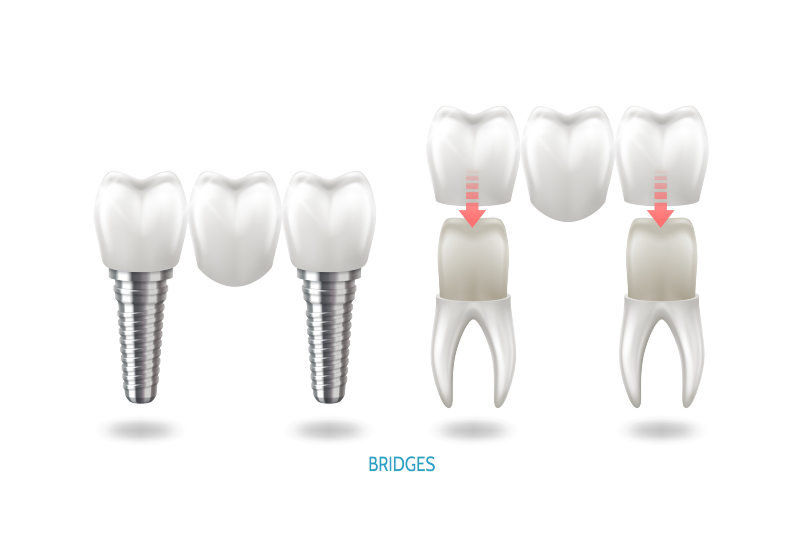
What Are Dental Implants & Dental Bridges?
A dental implant is a replacement tooth root made from biocompatible titanium that is surgically placed into the jawbone. Once the implant fuses with the bone, a custom crown is attached to create a natural-looking replacement tooth. A dental bridge, on the other hand, replaces a missing tooth by anchoring an artificial tooth between crowns placed on the neighboring teeth. Both options can restore appearance and function, but the treatment process, longevity, and maintenance requirements differ significantly.
Dental Implants vs. Bridges: Key Differences
Both treatments effectively replace missing teeth, but they do so in different ways. Here are some of the most important distinctions:
- Dental implants replace both the tooth root and the visible tooth.
- Dental bridges replace only the visible portion of the missing tooth.
- Implants do not rely on adjacent teeth for support.
- Bridges require neighboring teeth to be reshaped and crowned.
- Implants help stimulate the jawbone and reduce bone loss.
- Bridges do not prevent bone loss beneath the missing tooth.
- Implant treatment typically takes longer to complete.
- Bridges generally provide a faster restoration solution.
Dental Implants vs. Bridges: Pros & Cons
Every patient’s situation is unique. Understanding the benefits and limitations of each treatment can help you determine which option may be best for you:
Dental Implant Pros
- Preserves jawbone health
- Functions like a natural tooth
- Does not affect neighboring teeth
- Long-lasting solution
- Excellent aesthetics
Dental Implant Cons
- Higher initial cost
- Requires oral surgery
- Longer treatment timeline
Dental Bridge Pros
- Typically lower upfront cost
- Faster treatment process
- Effective for restoring function and appearance
Dental Bridge Cons
- Requires modification of adjacent teeth
- Does not prevent bone loss
- May need replacement sooner than implants
- Surgical procedure sometimes required
Bridges vs. Implants Durability & Longevity Comparison
When comparing tooth replacement options, longevity is often a major factor. While both dental treatments can provide excellent results, their expected lifespan can vary.
- The dental implant lifespan can last decades or even a lifetime with proper care.
- Implant crowns may occasionally require replacement due to wear.
- The dental bridge lifespan is generally 10 to 15 years.
- Good oral hygiene can significantly extend the life of both restorations.
Cost of Dental Implants vs. Bridges
One of the biggest considerations for many patients is cost. Dental implants typically involve a higher initial investment because they require surgical placement and multiple stages of treatment. However, their long lifespan may make them a cost-effective option over time. Dental bridges generally have a lower upfront cost and can often be completed more quickly. During your consultation at Charles Town Smiles, we can discuss your options and help you understand the costs associated with each treatment.
Maintenance & Care Requirements
Both dental implants and bridges require ongoing care to maintain their appearance and function. Fortunately, dental implant maintenance and dental bridge maintenance are similar to caring for natural teeth:
- Brush twice daily using a soft-bristled toothbrush.
- Floss around the restoration every day.
- Schedule routine dental cleanings and exams.
- Avoid chewing on hard objects such as ice.
- Wear a nightguard if you grind your teeth.
Which Option Is Right for You?
The best tooth replacement solution depends on several factors, including your oral health, jawbone density, budget, lifestyle, and personal preferences. Patients with sufficient bone support often benefit from the long-term advantages of dental implants, while bridges may be an excellent option for those seeking a quicker, non-surgical solution. A comprehensive dental evaluation is the best way to determine which treatment is right for your unique situation.
Restore Your Smile With Charles Town Smiles
If you’re considering dental implants or a dental bridge, the team at Charles Town Smiles is here to help. We offer comprehensive restorative dentistry solutions tailored to your individual needs and goals. Our experienced team will guide you through every step of the process and help you choose the treatment that best supports your long-term oral health. Schedule your consultation at our office in Charles Town, WV, and take the first step toward a healthier, more complete smile.
Frequently Asked Questions
Which option looks more natural, a dental implant or a bridge?
Both options can provide highly natural-looking results. However, dental implants often offer the most realistic appearance because they emerge from the gumline like a natural tooth.
Is getting a dental implant painful?
Most patients report minimal discomfort during and after implant placement. Local anesthesia and modern dental techniques help make the procedure comfortable.
Can a dental bridge replace multiple missing teeth?
Yes. Depending on the location and condition of the surrounding teeth, a bridge can often replace one or more consecutive missing teeth.
How long does it take to get a dental implant compared to a bridge?
A dental bridge can often be completed within a few weeks. Dental implants usually require several months because the implant must fuse with the jawbone before the final restoration is placed.